

 語学・英語学習ビミョー
留学しなくても「海外の同世代」とオンラインで話すと伸びる? 日本の高校生の研究と、研究の弱点
 2026.10.02
 English Corner(A2〜B2・4択クイズ)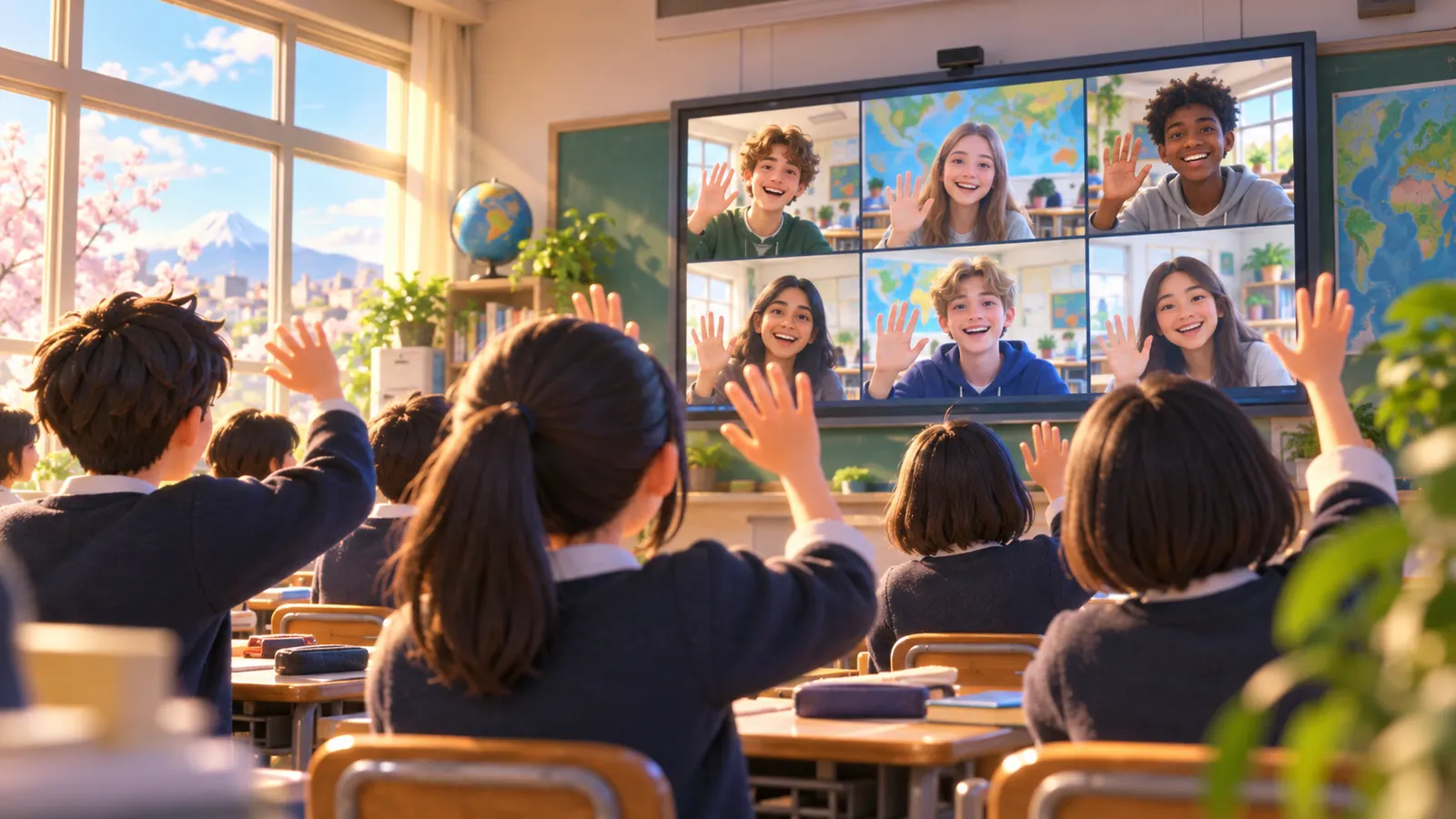
 読む前に予想してみよう!
オンラインでの第二言語のやりとりは、対面のやりとりに比べて、語学力を伸ばす効果がはっきり劣る
メタ分析では、オンラインのやりとりも対面と同じように言語発達を促し、両者に統計的な差は見られなかった。
 研究カード(どんな研究?)
- 対象
- 日本と台湾の高校生、スペインの大学生など
- 規模
- 数十〜数百人規模
- 研究の種類
- 前後比較・質的分析・メタ分析
- 確かさ
- ★★☆☆☆
海外の学生とのオンライン交流で、日本の高校生の話す意欲や会話力が伸びたという報告がある。ただし多くは小規模で比較群のない研究。
ひとことで言うと海外の同世代とオンラインで話すと英語を使う気持ちが育つ。証拠はまだ発展中!
留学は高い。時間もかかる。でも「英語を使う相手」がいないと、なかなか話す力は伸びない……。
そこで世界中の学校で広がっているのが、バーチャル・エクスチェンジ(オンライン国際交流)です。ビデオ会議などを使って、海外の学校の生徒と授業の一部として交流する取り組みのこと。効果はあるのでしょうか?
01日本と台湾の高校生がオンラインで交流したら
注目したいのは、交流の相手が英語のネイティブスピーカーではなく、同じく英語を学ぶ台湾の高校生だったこと。お互いに英語が母語ではないからこそ、「伝えたい」「わかってほしい」という気持ちで、工夫しながら話す経験ができたのかもしれません。
また、交流を前向きに受け止めた生徒ほど、中学までの英語の授業を楽しんでいた傾向もありました。
02スペインの大学生345人の振り返りから
スペインの研究者オダウドは2021年、13のオンライン交流に参加した大学生の345冊の学習ポートフォリオを分析しました。
学生たちが学んだと報告したことには、相手の国への固定観念を乗り越えた、第二言語で話す自信がついた、そして英語を「机の上の勉強」ではなく「人とつながる道具」として見直した、といったものがありました。さらに、交流の課題の設計しだいで、学べることが変わることも示されました。

03オンラインでも、対面と同じくらい効く?
「でも画面越しの会話って、対面より効果が低いのでは?」という疑問もあるでしょう。
ジーグラーは2015年(オンライン公開)、チャットなどのリアルタイムのオンラインのやりとり(SCMC)と対面のやりとりを比べた研究をメタ分析しました。その結果、どちらも言語の発達に効果があり、両者のあいだに統計的に意味のある差はなかったのです。少なくとも「やりとり」の効果は、オンラインでもしっかり得られると考えられます。
04どんでん返し:研究の多くは「小さく、比較がない」
ただし、ここは正直に書いておく必要があります。
バーチャル・エクスチェンジの研究には、参加者が数十人程度の小規模なものや、交流しなかったグループとの比較がない「前後比較」が多いのです。交流の前後で伸びたとしても、それが交流のおかげなのか、同じ期間の授業や成長のおかげなのかは、区別しにくいのが現状です。
アヴゴウスティの2018年の系統的レビューでも、Web 2.0のツール(特にマルチモーダルな機能)が異文化コミュニケーション能力の発達にさまざまな形で影響することが示される一方、マルチモーダルな環境での学習者を対象にした研究がまだ足りないとされています。
05まとめ
海外の同世代とのオンライン交流は、英語で話そうとする気持ちや自信、異文化への関心を育てる可能性があります。ただし、研究はまだ小規模で比較のないものが中心で、「これだけで英語が伸びる」とまでは言えません。
それでも、英語が「机の上の勉強」から「人とつながる道具」に変わる体験には、数字以上の価値がありそうです。チャンスがあれば、まず1回、画面の向こうの誰かと話してみましょう。
この研究を英語で読もう原田英語の English CornerNot every student can afford to study abroad. 音声
音声 4択クイズ9問A2・B1・B2タップして開く
原田英語の English Corner
この研究を英語で読もう
Studying abroad costs a lot of money. But you can talk with students in other countries online. This is called a virtual exchange. In a 2026 study, 36 Japanese high school students talked with students in Taiwan by video three times.
After the exchange, the Japanese students wanted to speak English more, and their speaking improved. But the study was small. We need more research to be sure.
68 words ・ CEFR A2
和訳を見る
留学には多くのお金がかかります。でも、オンラインでほかの国の学生と話すことはできます。これはバーチャル・エクスチェンジ(オンライン国際交流)と呼ばれます。2026年のある研究で、日本の高校生36人が台湾の生徒とビデオで3回話しました。
交流の後、日本の生徒たちはもっと英語を話したいと思うようになり、話す力も伸びました。しかし、この研究は小規模でした。確かなことを言うには、もっと研究が必要です。
4択リーディングクイズ
Q1. What is the passage mainly about?
海外の生徒とのオンライン交流(バーチャル・エクスチェンジ)がテーマなので C。
Q2. How many times did the students talk by video?
talked with students in Taiwan by video three times とあるので D。36 は日本の生徒の人数。
Q3. In this passage, "improved" means ...
their speaking improved は「話す力がよくなった」なので B。
Not every student can afford to study abroad. Virtual exchanges let learners talk with students in other countries through video calls. In a 2026 study, 36 Japanese and 28 Taiwanese high school students held three online sessions in English.
Their partners were not native speakers. They were other learners. After the sessions, the Japanese students showed more willingness to communicate, more international interest, better speaking skills and more awareness of their listeners. Most studies of virtual exchange are small, and many have no comparison group.
So it is hard to know whether students improved because of the exchange or because of their regular classes at the same time. A 2015 analysis gives some support. It found that online interaction helped language development about as much as talking face to face.
130 words ・ CEFR B1
和訳を見る
すべての学生が留学する余裕があるわけではありません。バーチャル・エクスチェンジなら、学習者はビデオ通話でほかの国の学生と話すことができます。2026年の研究で、日本の高校生36人と台湾の高校生28人が、英語でオンラインのセッションを3回行いました。
相手はネイティブスピーカーではありませんでした。同じ学習者だったのです。セッションの後、日本の生徒たちは、話そうとする意欲の高まり、国際的な関心の高まり、話す力の向上、そして聞き手への意識の高まりを示しました。バーチャル・エクスチェンジの研究の多くは小規模で、比較グループがないものも多くあります。
そのため、生徒が伸びたのが交流のおかげなのか、同じ時期の通常の授業のおかげなのかは、わかりにくいのです。2015年の分析は、ある程度の裏づけになります。オンラインでのやりとりは、対面で話すのとほぼ同じくらい言語の発達を助けることがわかったのです。
4択リーディングクイズ
Q1. Who were the Japanese students' partners in the 2026 study?
28 Taiwanese high school students とあり、Their partners were not native speakers. They were other learners. とあるので B。
Q2. What did the 2015 analysis find?
online interaction helped language development about as much as talking face to face とあるので A。
Q3. Why is it hard to be sure about the effects of virtual exchange?
Most studies of virtual exchange are small, and many have no comparison group とあり、交流の効果か通常授業の効果か区別しにくいため C。
For learners who cannot study abroad, virtual exchange, in which classes in different countries interact online, offers an affordable alternative. Its potential is illustrated by a 2026 study in which 36 Japanese and 28 Taiwanese high school students held three video sessions in English. Questionnaires, written reflections and paired speaking tests indicated that the Japanese students gained in willingness to communicate, international posture and speaking ability, and became more aware of their audience.
Their partners were fellow learners rather than native speakers. Broader evidence is encouraging: O'Dowd's analysis of 345 portfolios from 13 exchanges found that students reported overcoming stereotypes and gaining confidence, and that outcomes depended on task design, while Ziegler's meta-analysis showed that synchronous online interaction promoted language development about as much as face-to-face interaction. The research base, however, has clear weaknesses.
Many studies involve a few dozen participants and before-and-after comparisons without a control group, making it impossible to separate the effect of the exchange from ordinary classes or maturation. Learning outcomes are often self-reported, and a 2018 systematic review called for more research on multimodal online tools. Virtual exchange is promising, but more rigorous studies will have to confirm its effects.
195 words ・ CEFR B2
和訳を見る
留学できない学習者にとって、異なる国のクラスがオンラインで交流するバーチャル・エクスチェンジは、手の届きやすい代わりの選択肢を提供します。その可能性は、日本の高校生36人と台湾の高校生28人が英語で3回のビデオセッションを行った2026年の研究に示されています。アンケート、振り返りの記述、ペアでのスピーキングテストから、日本の生徒たちは話そうとする意欲、国際的志向性、話す力を伸ばし、聞き手をより意識するようになったことがうかがえました。相手はネイティブスピーカーではなく、同じ学習者仲間でした。
より広い証拠も心強いものです。13の交流から集めた345の学習ポートフォリオを分析したオダウドは、学生たちが固定観念を乗り越え自信を得たと報告していること、そして成果が課題の設計によって左右されることを見いだしました。また、ジーグラーのメタ分析は、リアルタイムのオンラインでのやりとりが、対面のやりとりとほぼ同じくらい言語の発達を促すことを示しました。
しかし、研究の土台には明らかな弱点があります。多くの研究は参加者が数十人程度で、比較群のない前後比較であるため、交流の効果を通常の授業や成長の効果から切り分けることができません。学習成果は自己報告であることも多く、2018年の系統的レビューは、マルチモーダルなオンラインツールについてさらに研究が必要だと述べました。バーチャル・エクスチェンジは有望ですが、その効果を確かめるには、より厳密な研究が必要です。
4択リーディングクイズ
Q1. Which statement best describes the author's overall view?
最終文 Virtual exchange is promising, but more rigorous studies will have to confirm its effects とあるので C。
Q2. What did O'Dowd's analysis show?
students reported overcoming stereotypes and gaining confidence, and that outcomes depended on task design とあるので A。
Q3. Why is a control group important, according to the passage?
比較群がないと making it impossible to separate the effect of the exchange from ordinary classes or maturation とあるので D。
重要単語
- virtual exchangeC1名詞(句)バーチャル・エクスチェンジ(オンライン国際交流)Our class joined a virtual exchange with Taiwan.
 virtual は「仮想の・オンライン上の」。telecollaboration(遠隔協働学習)とも呼ばれる。
 - willingness to communicateC1名詞(句)コミュニケーションへの意欲(WTC)Her willingness to communicate grew after the project. SLA の重要概念で WTC と略される。「話せる力」ではなく「話そうとする気持ち」。日本人学習者研究で頻出。
- interculturalB2形容詞異文化間のWe developed intercultural awareness. inter-(~の間の)+ cultural。intercultural communicative competence「異文化間コミュニケーション能力」。
- peerB2名詞同世代の仲間・同輩Talking with peers abroad was fun. peer pressure「同調圧力」、peer review「査読・相互評価」も頻出。
- stereotypeB2名詞固定観念The exchange helped us overcome stereotypes. 発音は /ˈsteriətaɪp/。overcome / challenge stereotypes「固定観念を乗り越える/問い直す」。
- control groupC1名詞(句)対照群(比較のためのグループ)Without a control group, the cause of improvement is unclear. 実験研究の基本用語。介入を受けるのは experimental group(実験群)。研究の質を見分けるカギ。
- affordableB2形容詞手ごろな・手の届くOnline exchanges are an affordable alternative to studying abroad. afford「(お金・時間の)余裕がある」。can't afford to do「~する余裕がない」は頻出。
 入試に出る順の単語帳を印刷する →
 全5561語の「科学英単語カード」で復習する →
 この話題を TED で聞く
同じテーマの TED・TED-Ed を、 TED HACK で。英語の見どころ・使える表現・学習ミッションつきの日本語ガイドです。(運営:原田英語)


このネタ、誰かに教えたくなった?
日本と台湾の高校生がオンラインで交流したら、日本の生徒の「英語で話したい気持ち」や会話力が伸びたという研究があるらしい。相手は英語ネイティブじゃなくてもOK。ただし研究の多くは小規模で、まだ“期待の星”段階。
押すと「マジかリスト」に保存されます
 出典・参考文献(4件)タップで表示
- Tabuchi et al. (2026) Effects of virtual exchanges on learners' affective and speaking outcomes. Language Learning & Technologydoi.org
- O'Dowd (2021) What do students learn in virtual exchange? A qualitative content analysis of learning outcomes across multiple exchanges. International Journal of Educational Researchdoi.org
- Ziegler (2015) Synchronous computer-mediated communication and interaction: A meta-analysis. Studies in Second Language Acquisitiondoi.org
- Avgousti (2018) Intercultural communicative competence and online exchanges: a systematic review. Computer Assisted Language Learningdoi.org

※本記事は上記の研究・公開資料をもとに、原田英語が独自の言葉で解説したものです。引用は著作権法第32条の範囲で行い、出典を明記しています。画像はすべてオリジナルのイメージです。研究結果には限界や個人差があります。誤りのご指摘は原田英語のお問い合わせフォームから。
 これも「マジか!?」


 語学
語学
中1で習う「三単現のs」、なぜ上級者でも言い忘れる? 文法には"身につく順番"があった
 語学
語学
英語を話す前の「1分」で何が変わる? 準備時間の研究で見えた"1分の壁"と点数の落とし穴
 語学
語学
同じスピーチを何回くり返せば上手くなる? 日本人学習者の実験では「5回目」まで速くなった
 語学
語学
発音指導は本当に効く? 86本のメタ分析は「効く」、でも"会話の発音"は別問題だった

 語学
語学
発音練習、"ネイティブっぽさ"より先に直すべき所があった。「伝わる発音」の研究
 語学
語学